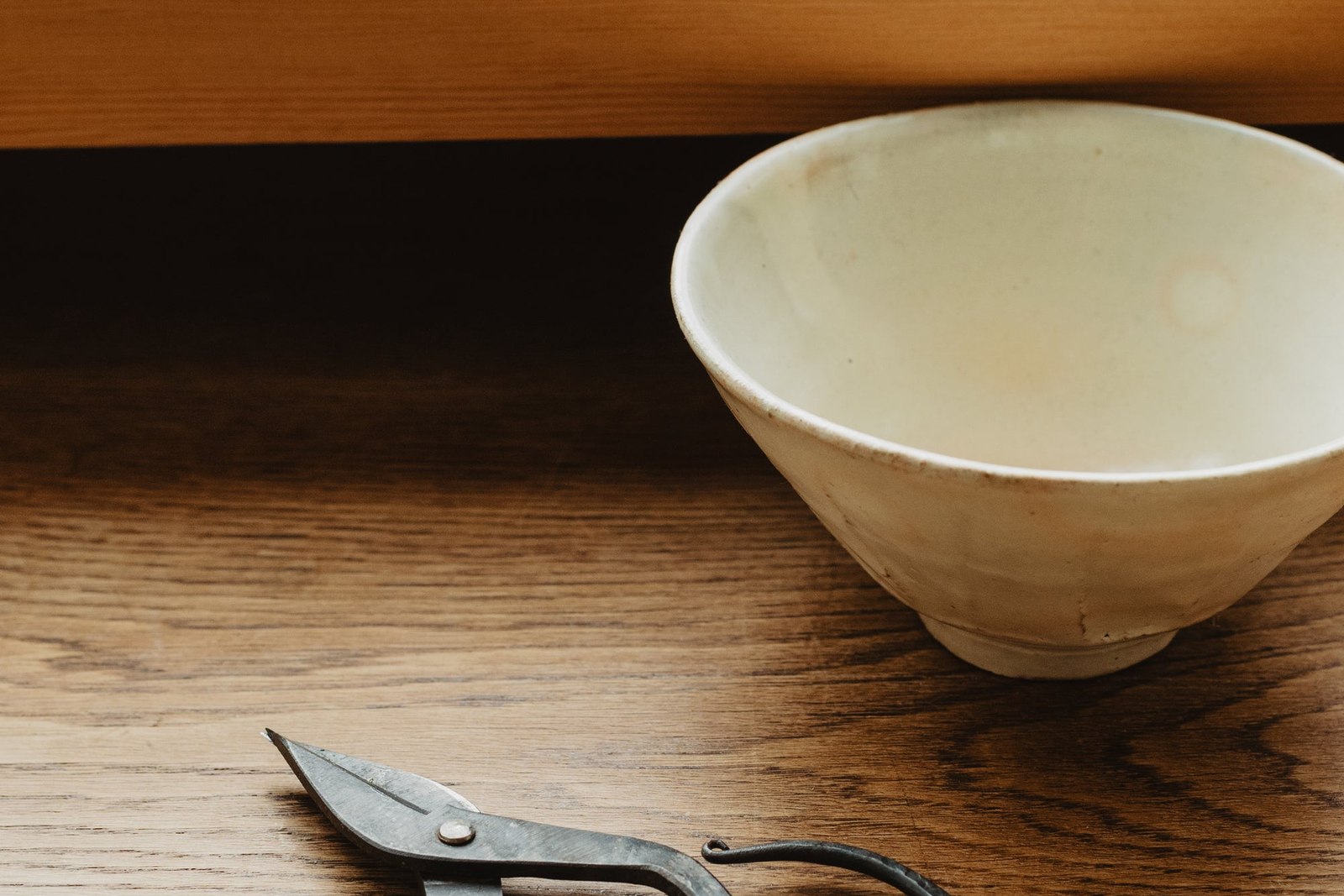
Describe the place where two materials meet
Where two materials meet, the object often changes character.
Where two materials meet, the object often changes character. A soft textile against metal, or wood around a ceramic insert, creates a boundary worth describing closely.
Identify the visible materials cautiously. A surface can imitate another material, so use “wood-like” or “metal-coloured” when identification is uncertain. Look for the joint's shape, alignment and visible fastening rather than beginning with a claim about craftsmanship.
Describe the transition
Does one material overlap the other, sit flush or leave a deliberate gap? Are edges concealed or made prominent? A photograph from a shallow angle can show a step that a frontal image misses. Include an overall view to explain where the junction sits.
Distinguish the way a joint looks from how it performs. An apparently tight seam may conceal movement or damage, and a visible gap may be intentional. Do not press, flex or dismantle a fragile object to settle the question.
If you are writing a catalogue note, keep the description precise enough to be checked by someone else. “A narrow brass-coloured strip separates the panels” gives them something to look for. “A perfect marriage of materials” does not. The boundary can support an interesting interpretation, but the observable detail should remain clear beneath the language used to describe it.